TR
土耳其
Türkiye
两小时、三十四首原创作品,从色雷斯的婚礼之夜到卡尔斯的雪原,再回到夜色中的伊斯坦布尔。
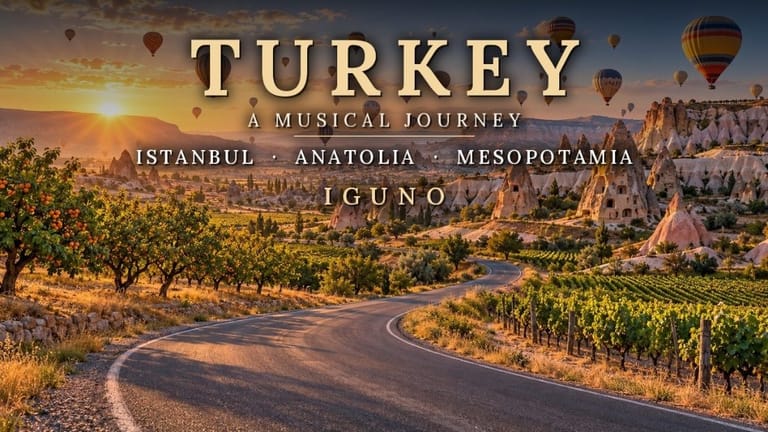
传统
- Ottoman classical music contributes the peşrev, an instrumental prelude, and the meyhane fasıl, the suite played through a long evening.
- Thracian karşılama is danced in nine beats, grouped unevenly — one of the asymmetric metres that run through Balkan and Anatolian music alike.
- The Aegean zeybek is slow and wide, danced solo with arms outstretched, in a nine-beat cycle of its own.
- On the Black Sea coast the horon is fast and tight, driven by the three-stringed kemençe.
- The âşık tradition of central Anatolia is sung poetry, accompanied by the player's own bağlama.
- In Konya the ney belongs to the Sufi ceremony; in the Taurus mountains the Yörük kaval belongs to the shepherds.
乐器
- Bağlama — long-necked lute of the Anatolian âşık
- Ney — reed flute of the Sufi tradition
- Kemençe — upright three-stringed fiddle of the Black Sea
- Kaval — shepherd's flute of the Taurus
- Davul and zurna — drum and shawm, the outdoor pair of Urfa and Erzurum
- Oud and kanun — the classical pairing heard in Mardin
来自这里的音乐
故事
这段旅程的文字故事仍在书写中。上方的音乐、传统与乐器部分已经完整。