TR
Turchia
Türkiye
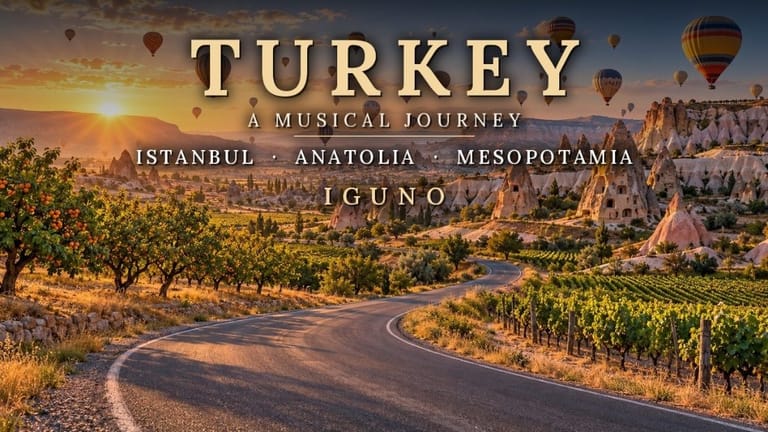
Due ore e trentaquattro brani originali, da una notte di nozze in Tracia alle nevi di Kars e ritorno a Istanbul di notte.
Tradizioni
- Ottoman classical music contributes the peşrev, an instrumental prelude, and the meyhane fasıl, the suite played through a long evening.
- Thracian karşılama is danced in nine beats, grouped unevenly — one of the asymmetric metres that run through Balkan and Anatolian music alike.
- The Aegean zeybek is slow and wide, danced solo with arms outstretched, in a nine-beat cycle of its own.
- On the Black Sea coast the horon is fast and tight, driven by the three-stringed kemençe.
- The âşık tradition of central Anatolia is sung poetry, accompanied by the player's own bağlama.
- In Konya the ney belongs to the Sufi ceremony; in the Taurus mountains the Yörük kaval belongs to the shepherds.
Strumenti
- Bağlama — long-necked lute of the Anatolian âşık
- Ney — reed flute of the Sufi tradition
- Kemençe — upright three-stringed fiddle of the Black Sea
- Kaval — shepherd's flute of the Taurus
- Davul and zurna — drum and shawm, the outdoor pair of Urfa and Erzurum
- Oud and kanun — the classical pairing heard in Mardin
La musica di qui
La storia
Il racconto scritto di questo viaggio è ancora in corso di stesura. La musica, le tradizioni e gli strumenti qui sopra sono completi.