TR
Turquie
Türkiye
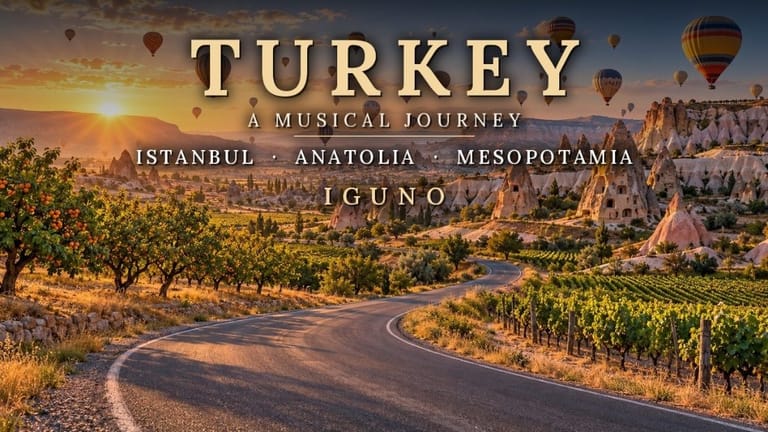
Deux heures et trente-quatre pièces originales, d'une nuit de noces thrace aux neiges de Kars, puis retour à Istanbul la nuit.
Traditions
- Ottoman classical music contributes the peşrev, an instrumental prelude, and the meyhane fasıl, the suite played through a long evening.
- Thracian karşılama is danced in nine beats, grouped unevenly — one of the asymmetric metres that run through Balkan and Anatolian music alike.
- The Aegean zeybek is slow and wide, danced solo with arms outstretched, in a nine-beat cycle of its own.
- On the Black Sea coast the horon is fast and tight, driven by the three-stringed kemençe.
- The âşık tradition of central Anatolia is sung poetry, accompanied by the player's own bağlama.
- In Konya the ney belongs to the Sufi ceremony; in the Taurus mountains the Yörük kaval belongs to the shepherds.
Instruments
- Bağlama — long-necked lute of the Anatolian âşık
- Ney — reed flute of the Sufi tradition
- Kemençe — upright three-stringed fiddle of the Black Sea
- Kaval — shepherd's flute of the Taurus
- Davul and zurna — drum and shawm, the outdoor pair of Urfa and Erzurum
- Oud and kanun — the classical pairing heard in Mardin
La musique d'ici
Le récit
Le récit écrit de ce voyage est encore en cours d'écriture. La musique, les traditions et les instruments ci-dessus sont complets.