NA
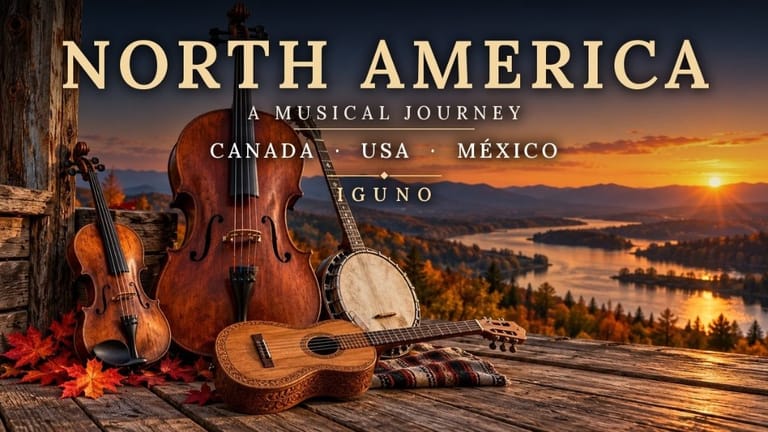
América del Norte
Canada · USA · México
Diecisiete piezas y tres países: violín celta en la costa atlántica de Canadá, porches de los Apalaches, el delta del Misisipi, metales de Nueva Orleans y los sones de México.
Tradiciones
- Cape Breton fiddling in Nova Scotia preserves Scottish Gaelic repertoire and bowing that shifted or faded in Scotland itself.
- Quebec's reels are played with the feet: the seated player taps a rhythm — podorythmie — while bowing, and the crooked tunes add or drop beats where the dance asks.
- Appalachian string band music carries Scots-Irish tunes reshaped by the banjo, an instrument of West African descent.
- The Mississippi Delta gave the blues its twelve-bar frame and its bent, between-the-notes pitch.
- New Orleans brass bands come from the city's parade and funeral tradition, where the second line follows the band.
- Mexican son is regional rather than national: son jarocho on the Veracruz coast, son huasteco in the northeast, mariachi's son jalisciense in the west.
Instrumentos
- Fiddle — Cape Breton, Quebec and Appalachian, each with its own bowing
- Five-string banjo — of West African descent, central to Appalachian music
- Harmonica and slide guitar — the voice of the Delta blues
- Brass — trumpet, trombone and sousaphone of the New Orleans parade
- Jarana and requinto — the small guitars of son jarocho
- Vihuela and guitarrón — the rhythm and bass of mariachi
Música de aquí
La historia
El relato escrito de este viaje todavía se está poniendo por escrito. La música, las tradiciones y los instrumentos de arriba están completos.